
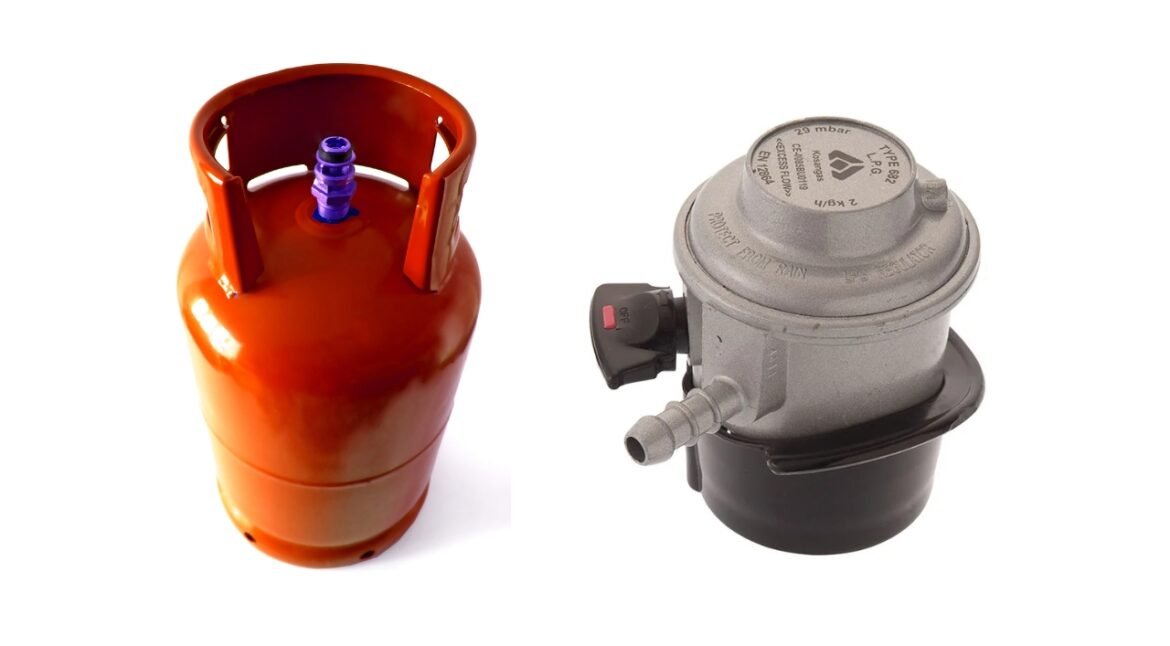
Most people probably do not give much thought to the small regulator attached to an LPG cylinder. We turn on the stove, the burner lights, and the regulator disappears into the background of everyday life, but a failure involving this device can have serious safety consequences.
That is why the revised GYS 523 – Specification for Low-pressure Regulators for Use with Liquefied Petroleum Gas (LPG) is being made compulsory by the Government of Guyana. This means importers, distributors and other stakeholders must ensure the regulators sold locally meet stringent requirements of the standard.
The national standard was successfully revised by a Technical Committee led by the National Standards Body – the Guyana National Bureau of Standards (GNBS) and comprising key stakeholders including the Environmental Protection Agency (EPA), Guyana Energy Agency (GEA), Guyana Fire Service (GFS), Guyana Revenue Authority (GRA), Massy Gas, GUYGAS Inc. and the Competition and Consumer Affairs Commission (CCAC). Extensive input was also garnered from others in the petroleum industry and the public through a Public Consultation process over a 60-day period before the document was finalised.
The standard is intended to establish clear requirements for the safety, construction, performance and durability of low-pressure LPG regulators used in Guyana. This move follows concerns raised by consumers about LPG cylinder explosions and leaks at premises.
GYS 523 distinguishes between single-stage and two-stage regulators. In a single-stage regulator, the inlet pressure is reduced to the desired outlet pressure in one stage. In a two-stage regulator, that reduction occurs in two stages within the same regulator.
The document specifies the materials, construction, performance and testing requirements for low-pressure single-stage and two-stage regulators used with LPG mixtures. For the purposes of this standard, it notes that low pressure refers to any pressure below 6.894 kN/m². For comparison, it also highlighted that domestic and commercial appliances normally operate at a gas pressure of 2.942kN/m2.
The revised requirements focus not only on whether a regulator functions, but also on the materials and construction used to make it, and its ability to withstand the conditions associated with LPG use.
Among its provisions, the standard requires that all regulator components shall be manufactured from, or treated with, materials that are compatible with LPG and are not adversely affected by the chemical or thermal conditions encountered during normal use. It further specifies that brass parts shall not be susceptible to season cracking, a form of cracking that can affect brass components under certain conditions. Further, the covers of regulators with a rated capacity of up to 1,000 l/h shall be manufactured from zinc-based alloys by pressure die-casting.
GYS 523 does not stop at the physical construction of regulators. It establishes requirements for testing their performance and durability.
It specifies the required finishes and materials used in regulator construction, valve pad materials, workmanship, threaded and non-threaded connections, low- and high-temperature testing, endurance testing, user instructions, maintenance requirements, and tests for the mechanical strength of connections, among others.
For the average consumer, the technical language may seem far removed from the kitchen. But these specifications matter precisely because consumers cannot ordinarily determine by looking at a regulator whether the materials, construction or internal components are adequate.
As part of the legal requirement towards making this standard compulsory, the Ministry of Tourism, Industry and Commerce is currently inviting interested persons to submit representations on the proposed compulsory LPG standard to the Executive Director, GNBS, on or before September 30, 2026. Once approved, the GNBS will commence monitoring this product.
The regulator may be small; the safety issue is not.
14
Aug