
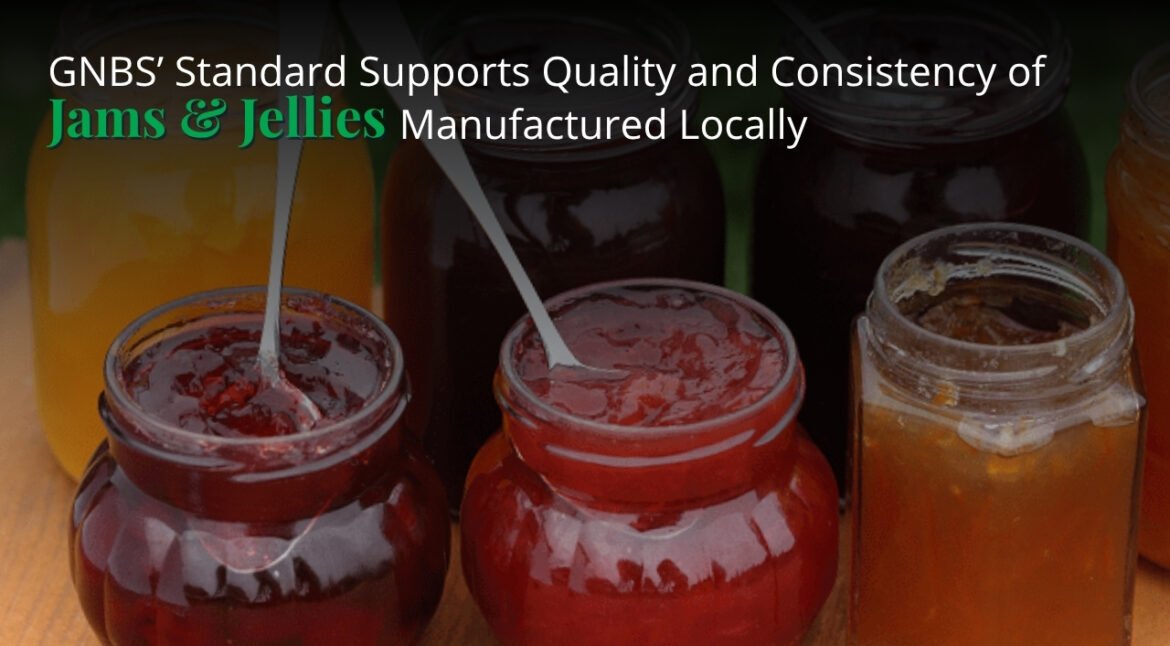
From a slice of bread at breakfast to a sweet filling in pastries and desserts, jams and jellies are enjoyed in households across Guyana. These popular fruit-based products also present opportunities for local agro-processors to transform fresh fruits into value-added products. However, producing quality jams and jellies requires more than combining fruits and sugar. The right ingredients, composition and processing practices are essential to achieving products that consistently meet quality requirements and expectations.
The Guyana National Bureau of Standards (GNBS) offers the GYS 38:2001 – Specification for jams (fruit preserves) and jellies, which establishes requirements for these fruit-based products, whether prepared from a single fruit or a combination of two or more fruits.
One of the key characteristics addressed by the standard is the amount of fruit used in production. Jams and jellies must contain a substantial proportion of fruit ingredients and have a relatively high level of soluble solids, which contributes to their characteristic consistency and composition.
Although the terms jams and preserves are often used interchangeably. Jams are prepared using fruit ingredients, while jellies are made from fruit juice extracted from whole fruits and clarified through filtration or other suitable methods. This difference influences the appearance and texture of the finished products.
The standard also outlines its scope by identifying products it does not cover. These include low-sugar fruit spreads, products made with non-carbohydrate sweeteners and specifically intended or labelled for diabetic or dietetic use, citrus-based marmalades, and products clearly labelled for manufacturing purposes.
The standard also addresses labelling requirements for jams and jellies, in addition to those outlined in GYS 9-9:2000 – Specification for labelling of commodities – Part 9: Labelling of pre-packaged foods. These include the product name, ingredients, net contents, manufacturer’s name and address, country of origin and lot identification. This information will help consumers make informed purchasing decisions while supporting product identification and traceability.
For local agro-processors and manufacturers, understanding and applying the requirements of GYS 38 can help promote greater consistency in production, strengthen quality assurance practices and enhance consumer confidence. It also provides a useful reference for businesses seeking to improve their products to remain competitive in the marketplace.
Additionally, manufacturers of locally made jams and jellies can apply for the GNBS Made in Guyana Certification Mark, which provides official recognition of products manufactured locally that meet the programme’s requirements. The Mark helps consumers easily identify authentic Guyanese products, promotes local manufacturing and provides businesses with an opportunity to strengthen their brand visibility and market appeal.
As Guyana’s agro-processing sector continues to develop, the adoption and application of relevant standards remains important in supporting the production of quality, locally manufactured products. The GNBS therefore encourages manufacturers, particularly small and medium-sized agro-processors, to obtain the standards applicable to their products and incorporate these requirements into their operations.
For more information on GNBS standards and services, contact the GNBS on 219-0064-66, WhatsApp 692-4627, visit the GNBS website at www.gnbsgy.com or access the Standards Portal at gnbsguy.com.