
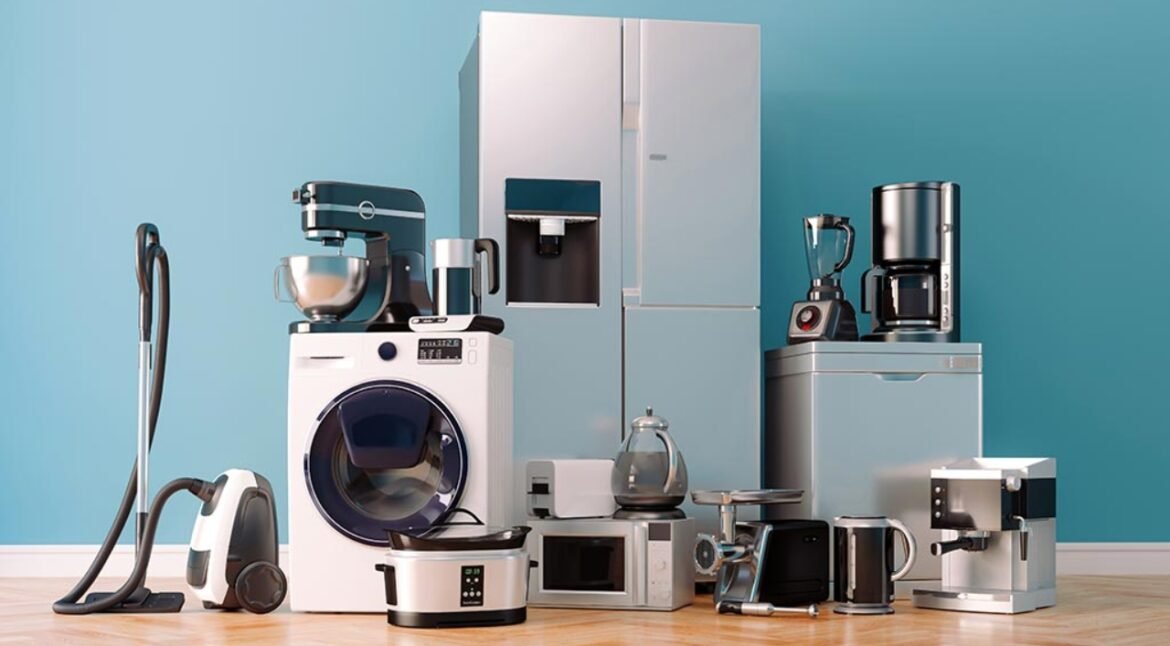
Many consumers regularly purchase household electrical appliances to replace outdated items, improve convenience at home or upgrade to more efficient technologies. While these purchases can make daily life much easier, it is important for consumers to carefully select appliances that demonstrate quality and meet proper labelling requirements.
Consumer protection is a paramount priority at the Guyana National Bureau of Standards (GNBS). As the national standards body responsible for standards and quality in Guyana, the Bureau works to ensure that consumers are protected from unsafe, substandard or misleading products labels. Properly labelled appliances provide essential product information and help reduce safety risks such as electrical hazards, misuse, malfunctions and damage. By enforcing national standards, the GNBS safeguards consumers and facilitates informed purchasing decisions for safe and reliable products, hence, value for money.
To support this mandate, GNBS monitors electrical appliances imported and sold in the country. Using the National Standard Specification for Labelling of Commodities – Part 7: Labelling of Electrical Equipment, Fittings and Household Electrical Appliances, the Bureau conducts inspections at ports of entry, warehouses and retail outlets across the country. These activities form part of the Bureau’s ongoing efforts to strengthen consumer protection.
The range of appliances monitored by the GNBS is extensive and includes refrigerators, televisions, blenders, microwaves and electric stoves, among others. According to the national standard, these appliances must be permanently marked with key electrical information such as nominal or rated voltage, rated frequency range, and rated power or current (for example, 120 volts/60 Hz). Appliances must also be labelled with the country of origin, the manufacturer’s name, trademark or identification number, the model number and serial number or type. This information helps consumers identify the product and its source, and is especially useful when after-sales service, repairs or product redress are required.
Consumers are also encouraged to look for internationally recognised certification marks such as UL, CE, CSA, or NOM, which indicate that the product has been tested and meets accepted safety and quality standards. When such certification marks are absent, the GNBS requires importers and dealers to provide test certificates from independent third-party laboratories to verify that the products meet quality requirements.
The standard also requires detachable appliance components to carry their own labels where necessary, while switches must be clearly marked or positioned to indicate which component of the appliance they control. Additional markings may also be included, provided they do not create any confusion for consumers. Safety instructions related to installation, use or maintenance must be clearly marked on the appliance to guide consumers.
By paying attention to standards, labels and certification marks, consumers can make smarter purchasing decisions and product use.
March 15 was World Consumer Rights Day, which remains an opportune time to remind consumers of their rights and responsibilities and the role Consumer Protection Bodies like the GNBS play in ensuring Consumer Protection. Through the enforcement of the requirements of several standards, the GNBS offers consumer protection.
For further information on how to access this and other standards, contact GNBS at 219-0064-66, via WhatsApp at 692-4627 or email info@gnbsgy.org