
In a global economy where many of the commodities we use, including fuel, vehicles, medicine, food items and construction materials, are imported, having a uniform system of measurement is critical. That system is the Metric System, formally known as the International System of Units (SI), which was adopted by Guyana in 2002. Over two decades later, as Guyana continues to advance in a rapidly developing world, understanding and embracing the use of metric units has become more important than ever.
Over the past week, the Guyana National Bureau of Standards (GNBS) joined National Measurement Institutes (NMIs) around the world in conducting activities to observe World Metrology Day (WMD). This year’s theme, “Metrology: Building Trust in Policy Making,” highlights the critical role accurate and reliable measurements play in supporting informed decision-making, fair trade and effective governance.
World Metrology Day is observed annually to commemorate the signing of the Metre Convention on May 20, 1875, by representatives of seventeen nations. The Convention established the International System of Units (SI), or Metric System, as the international standard for measurement in industrial, commercial and societal applications. Today, it plays an essential role in international trade and is widely used in scientific and technological research and development.
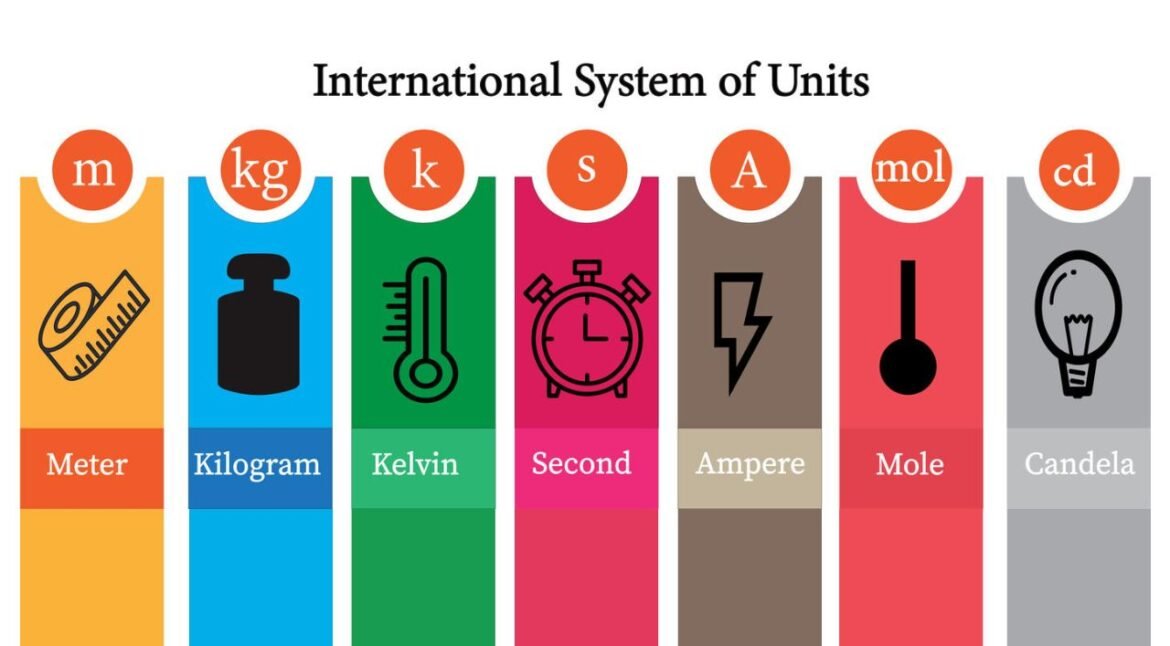
The SI system consists of seven base units: the kilogram (kg), metre (m), second (s), ampere (A), kelvin (K), mole (mol) and candela (cd). These units are used internationally and support consistency and accuracy across countries and industries. One of the greatest advantages of the Metric System is its decimal nature, which allows for easy conversion between units by multiplying or dividing by 10, 100 or 1000. Prefixes such as milli-, centi- and kilo- help users understand quantities quickly with simplified calculations. For example, 1000 grams equal 1 kilogram, and 1000 millilitres equal 1 litre.
After several years of the dual system of measurement in Guyana (Metric and Imperial systems), Guyana fully adopted the metric system of measurement by the passing of order #4 of 2001. This order made the use of the metric system mandatory as of January 2002. Since then, GNBS has employed several strategies to encourage the use of the metric system locally. Today, this measurement system is being utilised by approximately 95 percent of the world’s population as their official, primary system of measurement. Virtually every country has universally adopted it, leaving only a tiny fraction of the global population.
As we observe World Metrology Day, it remains imperative for us to fully adopt and use the SI Units of measurement. Almost all our National Measurement Standards, from which local measurements are traceable, are in SI Units.
Therefore, GNBS encourages wholesalers, retailers and consumers to fully embrace the Metric System. Solid goods should be bought and sold in grams and kilograms, while liquids should be measured in litres and millilitres. Businesses are also encouraged to package, label, advertise and display prices for goods using metric quantities only.
As we commemorate World Metrology Day 2026, the GNBS remains committed to providing the guidance and services necessary to ensure traceable and reliable measurements across all sectors of the economy. For more information on GNBS Legal Metrology services, visit gnbsgy.org, call 219-0064–66, or WhatsApp 692-4627.